
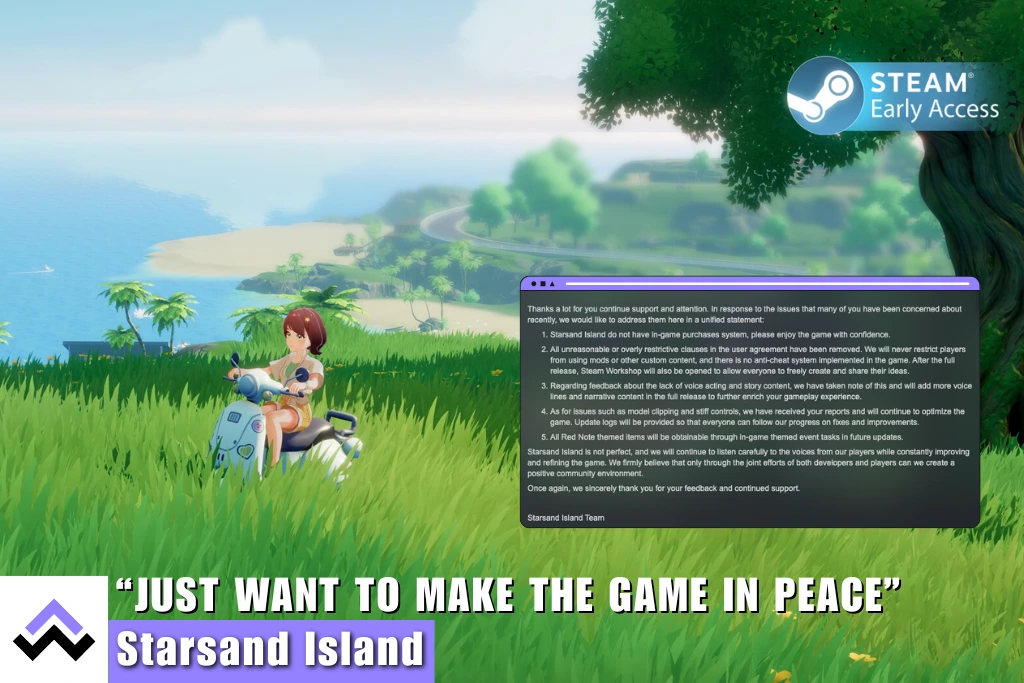

Starsand Island, one of the most anticipated upcoming indie games from small indie studio Seed Sparkle Lab, has run into an unusual hiccup after its Early Access launch: a sudden surge of very positive Steam reviews that the community suspects might not be entirely genuine.
The Steam page currently shows a “Very Positive” rating with over 1,700 reviews. But a wave of new reviews raised red flags because many appear to come from accounts with minimal activity, similar recent games played, and strange phrasing like mentioning features that don’t exist in Early Access yet.
While fake reviews aren’t new in gaming, they hit indie teams differently. On Steam, user reviews determine visibility, algorithmic placement, and discoverability for games without big marketing budgets. That can be make-or-break for smaller developers.
This situation has put Seed Sparkle Lab in a no-win situation:
- If the reviews are real, they boost visibility and may attract players who would otherwise miss the game.
- If the reviews are fake, they risk eroding trust with players and forcing the devs to police review activity instead of improving the game.
The studio addressed the issue on Discord, insisting they aren’t behind the sudden review surge and asking whoever is responsible to stop, so the team can focus on fixing bugs, improving gameplay, and engaging with real players.
Even though Valve has rules against fake reviews, and has removed games in the past when violations are proven, this case is murky. That uncertainty is frustrating for indie developers, who rely on player feedback and organic growth to survive.
At its core, this story isn’t just about suspicious Steam reviews. It highlights how fragile indie game visibility can be, how the actions of others (whether bots, marketing schemes, or overzealous fans) can influence perception, and how even positive-looking activity can become a distraction for a small team trying to ship a game they care about.



Respect each other, speak your mind, and focus on ideas, not individuals.