
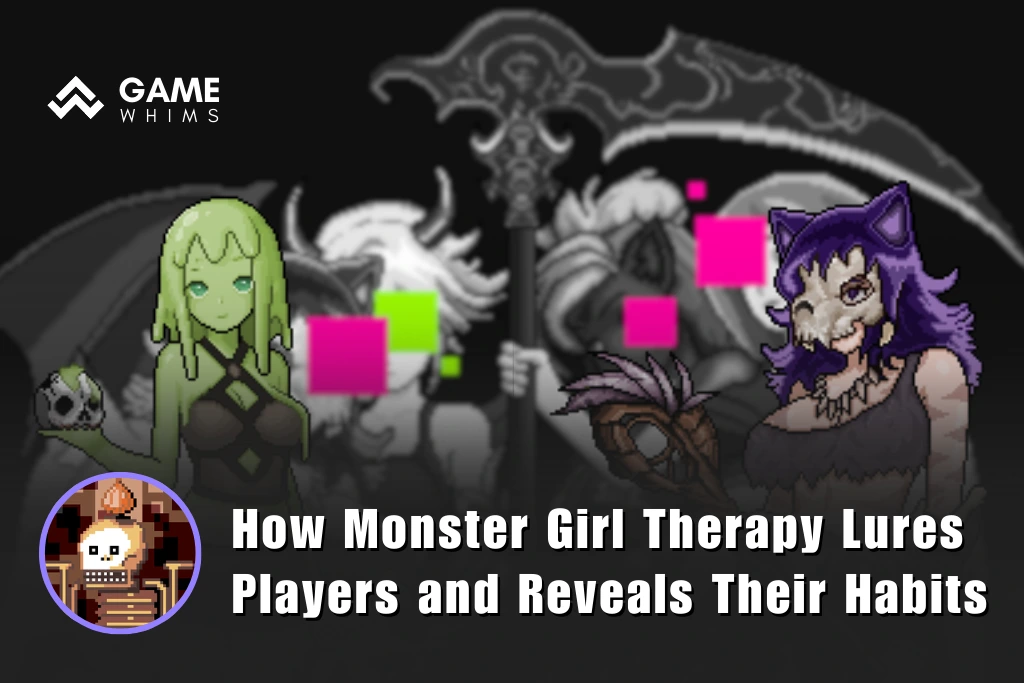

Monster Girl Therapy looks, at first glance, exactly like the game its title promises: pixel-art worlds, retro RPG exploration, and a parade of monster girls waiting to be rescued. For anyone familiar with anime fandom or dating sims, the expectations are almost automatic: flirtation, fan service, and the familiar thrill of earning the affection of quirky characters.
And that’s precisely the expectation the game relies on.
Andre Pönitz, the developer behind our recently reviewed Monster Girl Therapy is acutely aware of the baggage this premise carries. “Ignoring for a moment that monster girls are—to be blunt—a fetish,” he says, “which isn’t irrelevant for this game.” Yet there’s more to the appeal than titillation. Monster girls occupy a curious middle ground: recognisably human, yet undeniably other. That duality became the foundation for the project’s themes. “They blend the human and the other,” he explains, and the game itself is ultimately about “understanding and empathising.”
The retro presentation helps set the trap. SNES-inspired pixel art and straightforward overworld exploration evoke what the developer calls “the very essence of role-playing nostalgia,” a memory of games that felt simpler and more innocent. Part of that choice was practical: “Since game development is still a hobby for me, it always comes down to a mix of what fits the concept, and what I can actually do.” But the nostalgia also serves a psychological purpose as it encourages players to approach the game with familiar assumptions, the comforting rhythms of early ’90s RPGs lulling them into a sense of ease.

Inside the game, the world is collapsing, populated by monster girl NPCs. The player’s apparent objective is simple: help them escape before everything disappears. On the surface, the player assumes the role of rescuer. Yet the characters themselves resemble archetypes familiar to dating-sim players such as the flirtatious one, the shy one, the overenthusiastic one. It’s easy to begin interacting with them as objects to be won rather than individuals to understand.
The developer anticipated that reaction and leaned into it. When asked whether the fan-service elements risk misleading players, he is blunt. “Short answer: I’ll take that. And I am somewhat afraid of the Steam reviews… sorry not sorry.”
This misdirection is necessary. For the game’s critique to land, the fantasy must feel convincing first.
“The most effective deconstructions have a real reverence for the thing they’re deconstructing,”
— Andre Pönitz
He nods to films like RoboCop and Starship Troopers, which entertain even as they dismantle the ideas behind them. Monster Girl Therapy takes a similar approach. The aesthetics of fan service are present, but they are part of the setup: “The game does need some fan-servicey appeal in the first place… otherwise it won’t resonate with the people I want to reach.”
Where the game begins to shift is in how it handles its characters. Conversations with the monster girls are long, sometimes awkwardly paced, and easy to rush if the player is focused purely on progression. The developer admits this wasn’t entirely intentional: “I do hope most people like the dialogue. If it’s too boring or too slow, I won’t claim that as intentional.”
Still, the structure reinforces the game’s central idea. Monster Girl Therapy is, in many ways, a game about listening. The more players treat characters as objectives rather than individuals, the more the story quietly mirrors that behaviour. “In general, I wanted a game that also works with a ‘bad’ ending,” he explains. “It’s your ending after all. And it should be allowed to feel somewhat bad.” He cites Undertale as an influence, another game that turns player behaviour into narrative consequence.
Despite its pointed commentary, the developer resists framing the game as a moral lecture. “I’d like to think it isn’t a ‘message game’ with one clear takeaway,” he says. What matters is not the answer but the moment of self-reflection the game creates. “Just reflect a bit,” he adds. “The answer isn’t as important as the reflection itself.”
The practical layer of the design comes in achievements, which nudge players toward alternative approaches and discoveries throughout the story. “Well,” he admits, “apart from the ‘Ultimate Master’ ones. Those are just for the masochists.”
By combining fan-service aesthetics with deliberate pacing, reflective mechanics, and nostalgic presentation, Monster Girl Therapy becomes more than a dating-sim variant. It’s a mirror where players are invited to confront their assumptions, to consider how they interact with characters, and ultimately, to see how their habits shape the narrative itself. The trap is set with charm and nostalgia, but the payoff is self-awareness. A lesson quietly embedded in an unassuming RPG.

Respect each other, speak your mind, and focus on ideas, not individuals.