
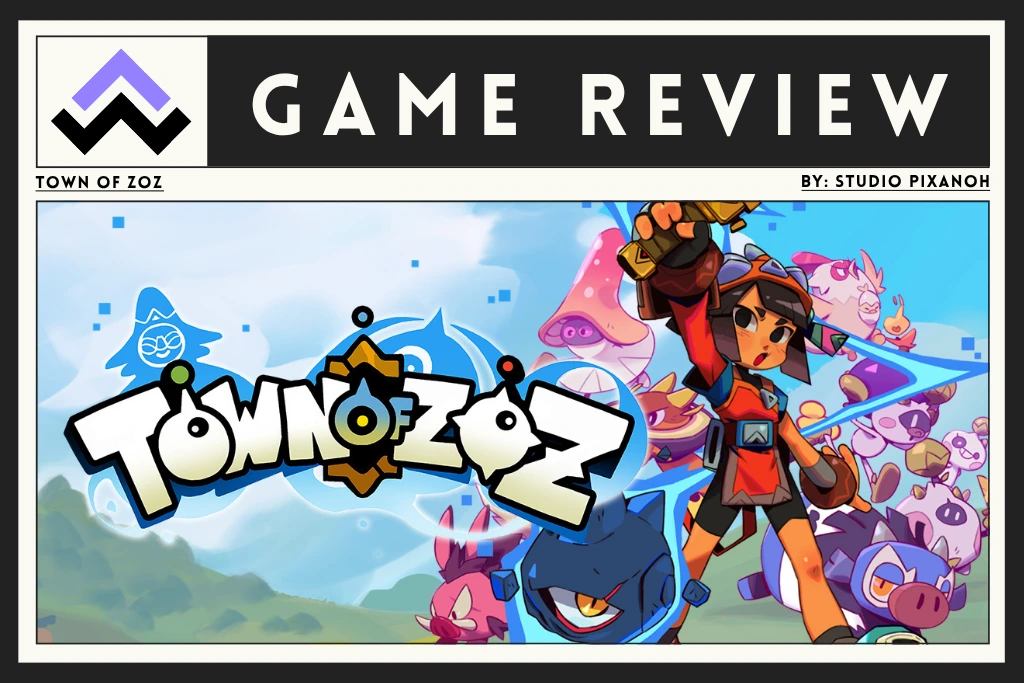

I remember watching the Town of Zoz announcement at the Future Games Show at Gamescom 2025, and it really stirred my longing for the rich flavors of Latin cuisine. I played the game on PC and instantly fell in love with its blend of JRPG and life simulation elements, especially farming and cooking.
However, the vibrant and cozy art style can be deceiving. You might find yourself wrapped in a warm blanket, tending your avocado farm, bartering in the market for salsa, and preparing tortillas in the kitchen before heading out on an adventure. At the same time, there are telltale signs of a nightmarish event about to unfold, and it’s up to you to save the town.
Town of Zoz Review
Release date: April 9, 2026
Reviewed on: Windows
Time played: 9+ hours
Developer: Studio Pixanoh
More Life Simulation Than RPG (At Least at the Beginning)
Most players who tried the demo compared it to Breath of the Wild because of its cooking mechanics. That comparison is partially true. You need to eat to restore health. Raw ingredients recover small amounts, while cooked meals restore more and provide temporary buffs.
In Town of Zoz, you also have to farm these ingredients. Yes, enemies do drop cilantro and bananas. But that’s a different kind of farming. What I meant was farming which involves plowing land, watering plants, and fertilizing them as part of a daily in-game routine, very much in a Stardew Valley style.
The mechanics are simple, and I often felt annoyed when my watering can ran out, forcing me to refill it from the well. Still, it adds to the immersion, and there’s something strangely addictive about these repetitive chores.
You can cook at home or, for full immersion of the main protagonist’s bratty personality, in your mom’s restaurant kitchen. The cooking gameplay is quite similar to Overcooked, where you rush to slice onions, mix batter, and heat tortillas within a time limit.

There’s no failure state in cooking, though. The faster you prepare dishes, the higher their quality. Better quality dishes can be sold for more or provide stronger health recovery and buffs.
If you don’t have the ingredients, you can rely on local markets for bartering. I found it especially difficult to obtain citrus, meat, and sazon seasoning, so the market became my main alternative to farming. Otherwise, you’d have to slay monsters for drops.
However, up to the point where I am in the game, the markets don’t seem to update their inventory aside from gold coins. This could be a bug, or it might mean the town’s economy depends entirely on what you can trade.
With all that said, it’s easy to wonder whether all these systems are necessary. At times, the game feels like it might become too convoluted without adding real value. But I can assure you, these systems are meaningful by design.
A Tedious Start, but It All Makes Sense as You Progress
The first few hours of the game feel simple and cozy. Combat is mostly limited to dealing with cute but annoying creatures that bother nearby farms. Side quests focus less on exploration and more on cooking and farming tasks. For players expecting immediate action-adventure, the early game may feel a bit too tedious and slow due to the heavy focus on chores.
But eventually, things shift. You stop playing as a simple town hero fighting mushrooms and fuzzy creatures, and a darker past begins to reveal itself. The game takes on a slightly darker tone while still maintaining its cozy charm.

Now, it’s common in storytelling to introduce a character’s daily life before throwing them into a life-changing situation. Town of Zoz handles this transition cleverly by gradually shifting from life simulation to action-adventure through its mechanics.
Let’s take a look at The Good Old Days, the major plot developments rely on exposition dumps. You’re asked to accept the premise and move forward, and this is visible in most adventure games. Here, the game wants you to live the life of an ordinary resident first, experiencing the world through Ito, a young shaman.
Ito’s father constantly nags about his incompetence with chores, insisting that he’ll understand their importance one day. As you progress, that message becomes clear to Ito, but also to you as a player. What starts as routine farming and cooking for side quests eventually becomes essential for survival.
To put into picture, Ito starts as incompetent, annoyed by chores. You, as a player, are also annoyed by in-game chores. Later, Ito understands responsibility around the same time where you also realizes that these systems matter.
What happens here is the game recontextualizes existing systems, whereas most games just replace systems when tone shifts. From my interview with the studio, they explained how they leverage game mechanics into a narrative tool.
It took me around eight hours to reach the point where the game becomes more JRPG-focused. During that time, there were many moments when I felt exhausted going back and forth between my farm and the market. While the slow start makes the later progression more profound and meaningful, it can also be a major barrier for players looking for immediate action.
Actions Are Standard, but Technical Issues Impede Adventuring
I’ve spent most of this Town of Zoz review focusing on the life simulation aspects, but the action-adventure side deserves attention as well.
Combat is fairly standard for the genre. Ito can perform light and heavy attacks, dodge-roll to evade, and use charged attacks. One unique feature is the companion system, which you control simultaneously using the right joystick. You start with a floating spirit and can unlock additional companions with water-based abilities.
Enemies and bosses follow simple patterns and aren’t as punishing as those in Death’s Door. You can also use environmental elements to your advantage, such as explosive plants scattered throughout the map.
Customization options include clothing for aesthetics and pins that grant permanent buffs when equipped. You can also collect rare soul cartridges to unlock new abilities for your companions.

Exploration is… breathtakingly amazing, thanks to the vibrant environments inspired by Latin American culture. The map features busy, narrow streets, dense tropical forests, and structures ornated with Aztec-inspired designs. Even the dishes you prepare are based on real Latin cuisine.
“I wanted players to feel the same sense of connection that cooking gives me… Each recipe reflects a piece of my life and the traditions that shaped me.”
— Max Gonzalez, Creative/Art Director
However, technical issues hold the experience back.
You can ride buses as a form of fast travel. When you venture beyond the town’s periphery, time progresses, and due to a curfew set by your parents, you can’t travel after dusk.
While this system sounds interesting, it doesn’t work as smoothly in practice. Locations that really matter to you as a player aren’t easily accessible via fast travel.

You can fast travel between your home, the town, and areas outside of Zoz. However, within the town itself, you still have to walk long distances to reach points of interest, even though bus stations are scattered throughout. This adds unnecessary friction to an already chore-heavy experience.
The most noticeable issue occurs during the quest at Ahyah’s Reach. Some paths remain locked until you clear enemies or destroy structures like totems. During this quest, I encountered a situation where the path stayed locked, thus preventing further progress.
It’s unclear whether this is due to a bug or unclear objectives, but either way, it disrupts the flow of exploration.
Final Verdict: Good
Town of Zoz is a game that asks for great patience, especially within the first few hours. What initially feels like a slow, chore-heavy life simulator gradually reveals itself as a carefully constructed foundation for something deeper. The farming, cooking, and bartering systems become essential to both the narrative and your survival.
With all said, the experience isn’t without its frustrations. The slow opening hours can be a tough sell for players expecting immediate action, and the technical issues, especially around traversal and progression, can break immersion at the worst times.
But still, Town of Zoz offers a heartfelt blend of cozy life simulation and adventure, backed by a strong cultural identity and thoughtful design. It may not be for everyone, but for those willing to embrace its pace, there’s something special waiting beneath its warm and inviting surface.
The Good
- Engaging cooking and farming mechanics.
- Unique companion system and environmental interactions.
- Beautifully designed streets, forests, and Aztec-inspired structures.
The Bad
- Tedious early gameplay.
- Fast travel limitations, locked paths, and unclear quest guidance.
ⓘ Review Disclaimer
We at GameWhims received a key for this game for free, this however didn’t impact our review in any way.
FAQs
Town of Zoz is currently available on PC, with plans for future console releases.
The game starts heavily as a life simulation, focusing on farming, cooking, and chores. As you progress, it gradually shifts into JRPG-style action and adventure.
Yes, you can use buses for fast travel between your home, the town, and areas outside of Zoz.




Respect each other, speak your mind, and focus on ideas, not individuals.